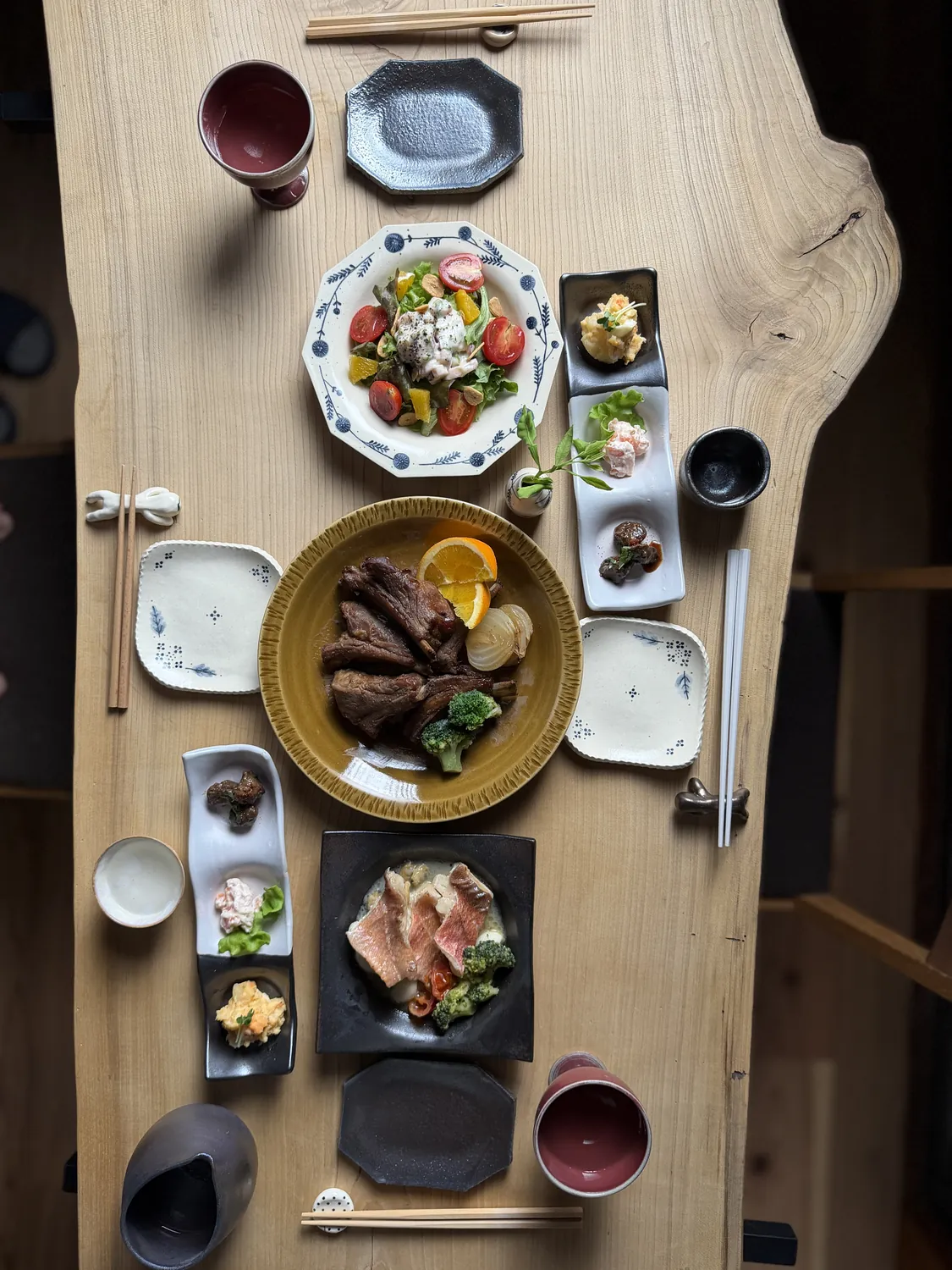
Pottery fired
at the foot of Mount Hiei.
A small kiln in Otsu, Shiga,
making pottery for the everyday table.
Scroll
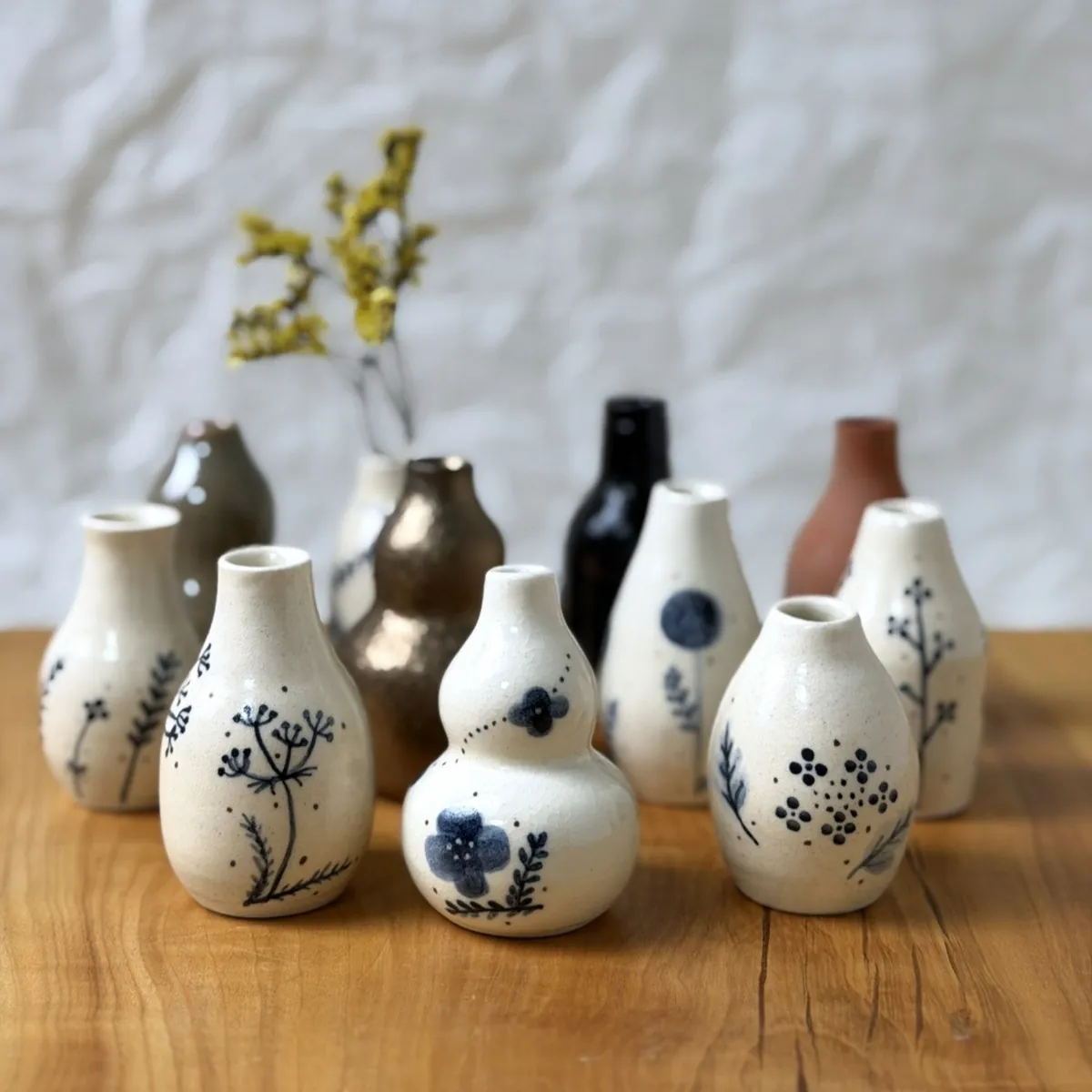
Bud vases with indigo botanicals
For ordinary days,
made with care.
All our clay comes from Shigaraki. For our ash glaze, we use wood ash from Ikadachi.
In our studio in Shigasato, Otsu,
a brother and sister each make pottery by their own hand.
Serving a bowl of rice, placing a single flower in a vase —
we hope our pottery finds a place in days like these.
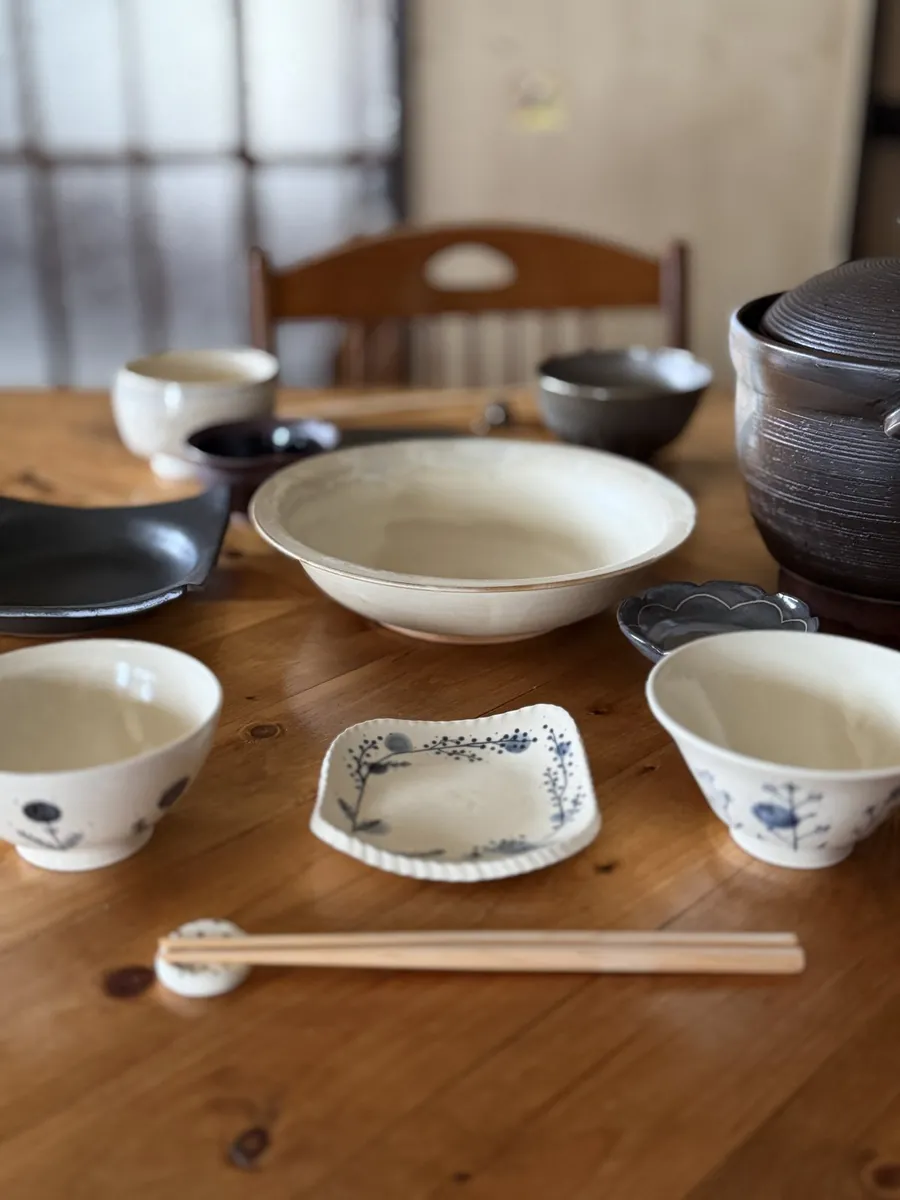
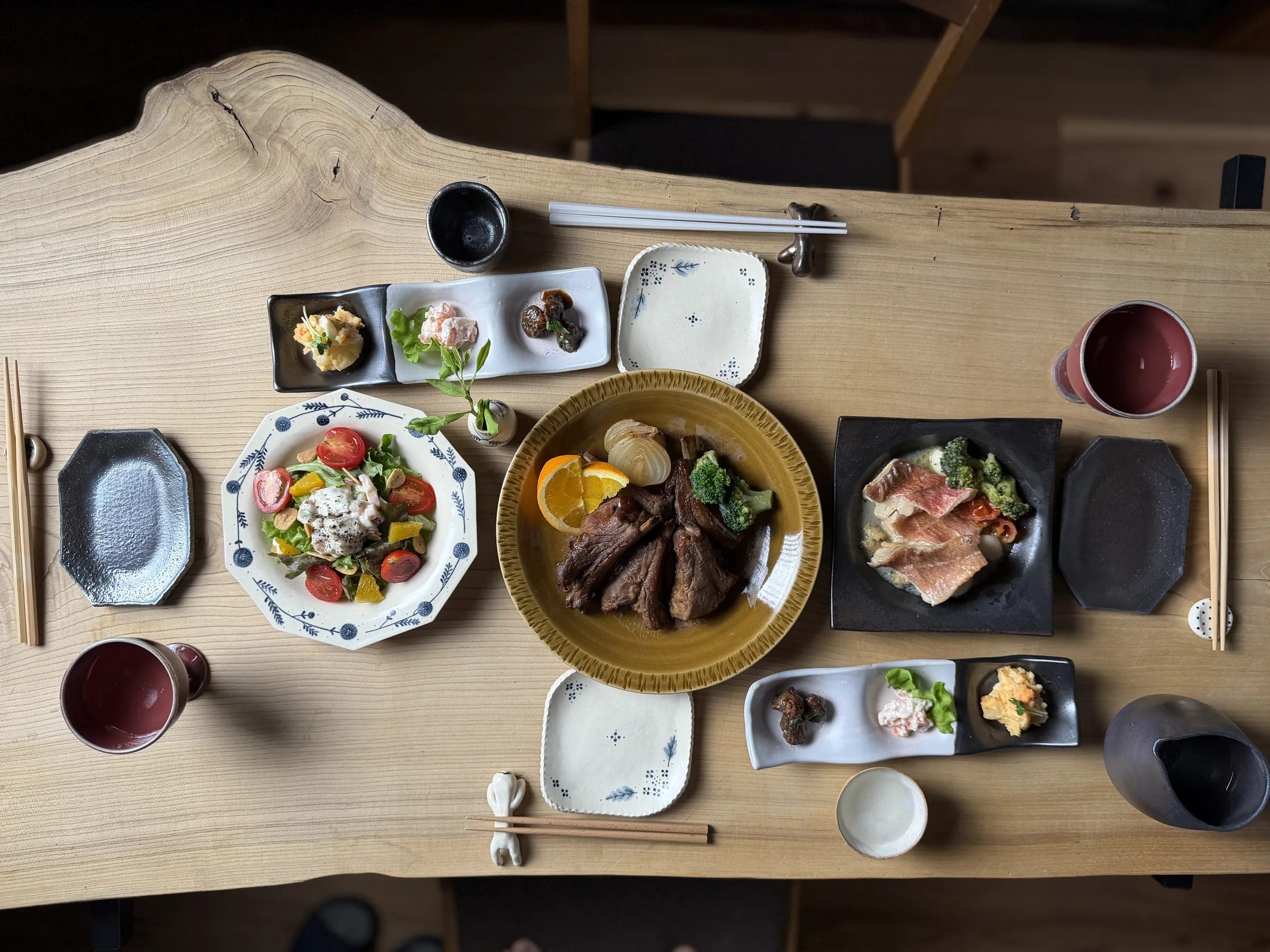
Morning table
土
Shigaraki clay
釉と火
Glazes & firing
用
Made to be used
Four faces of our pottery
うつわの表情
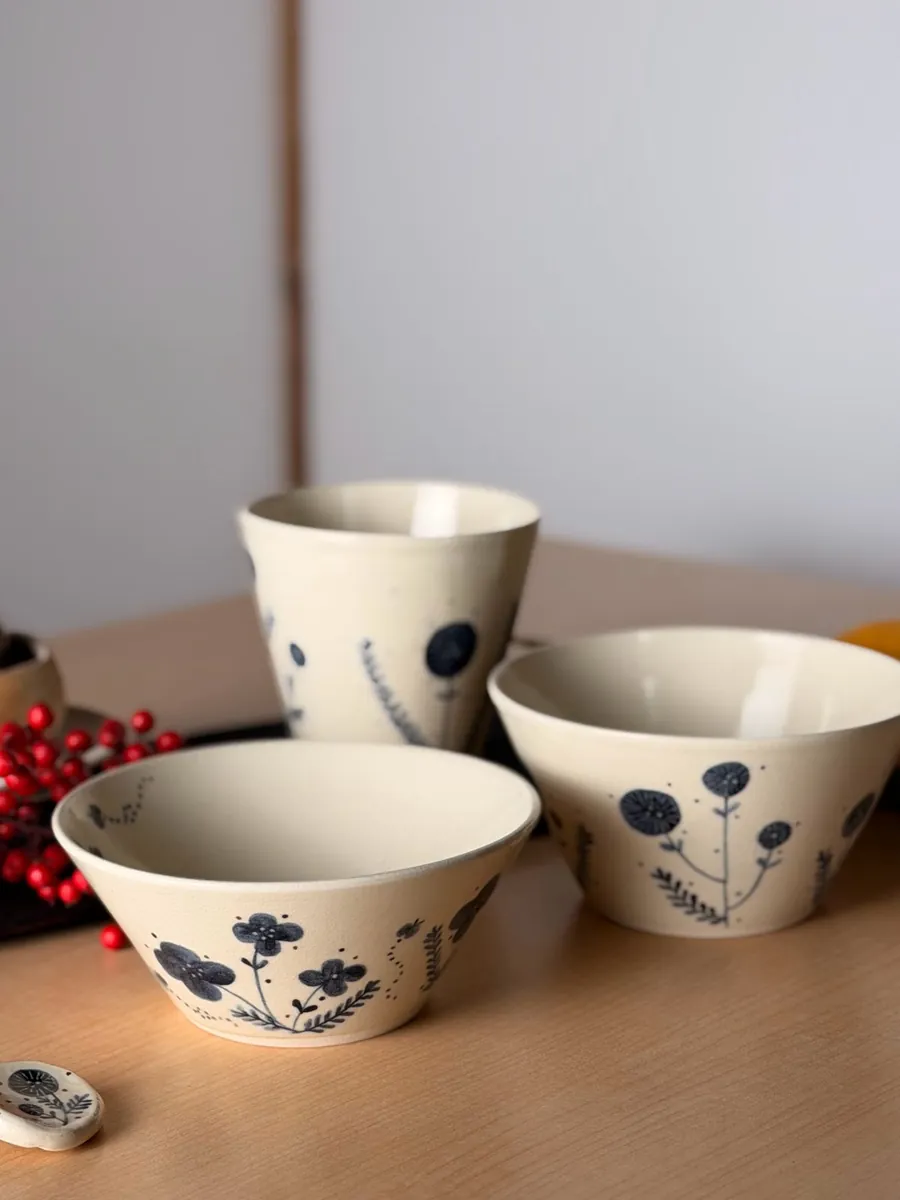
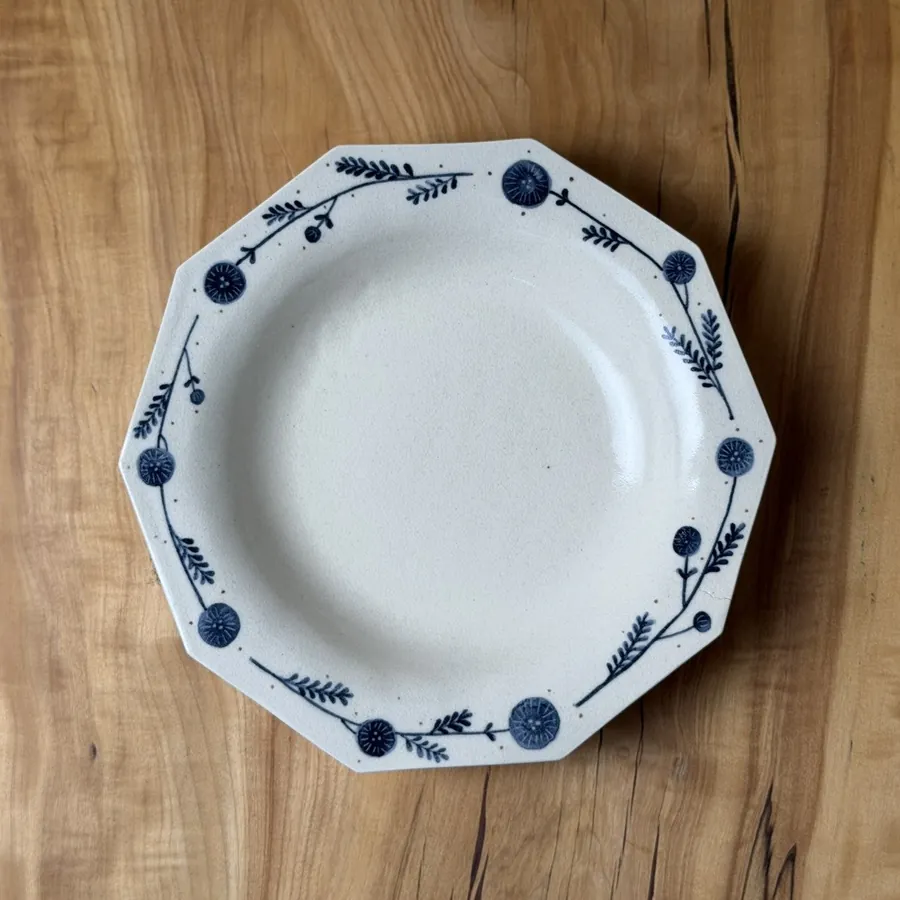
Indigo botanicals
藍の草花
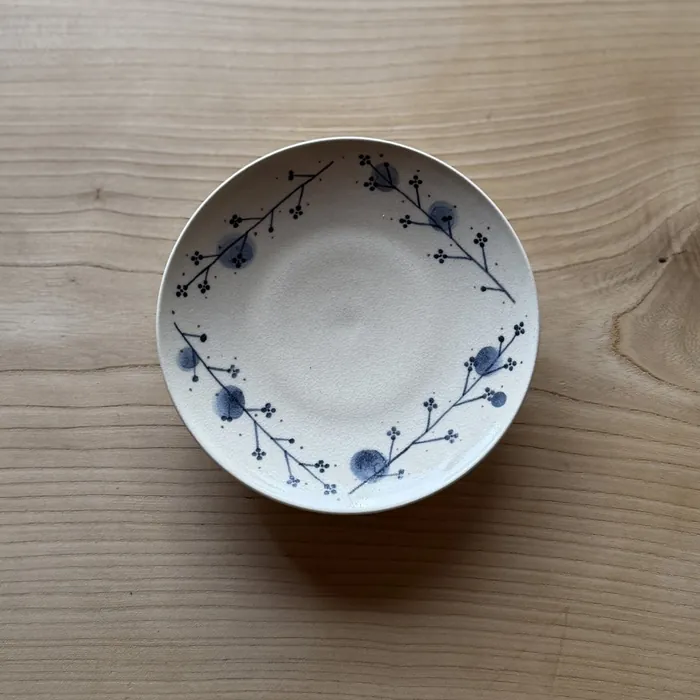
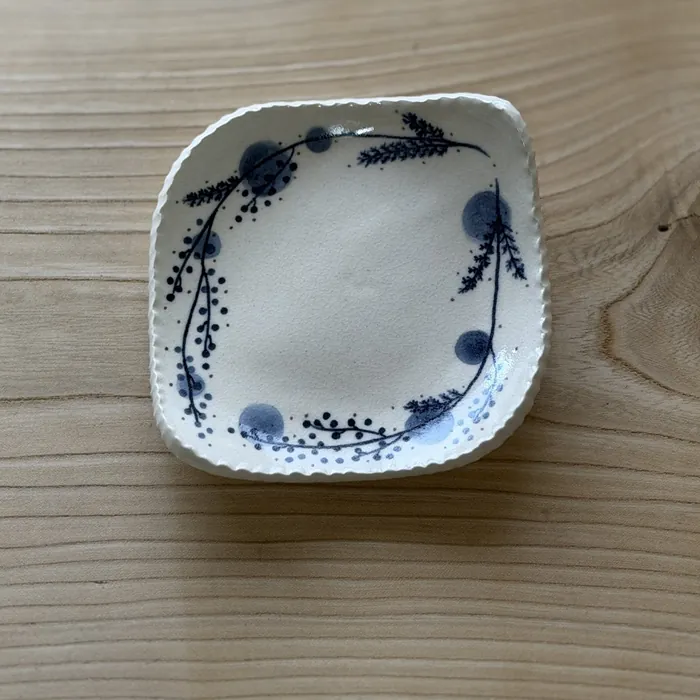
Flowers painted in cobalt under the glaze on white clay — sometsuke. At home with Japanese and Western dishes alike.
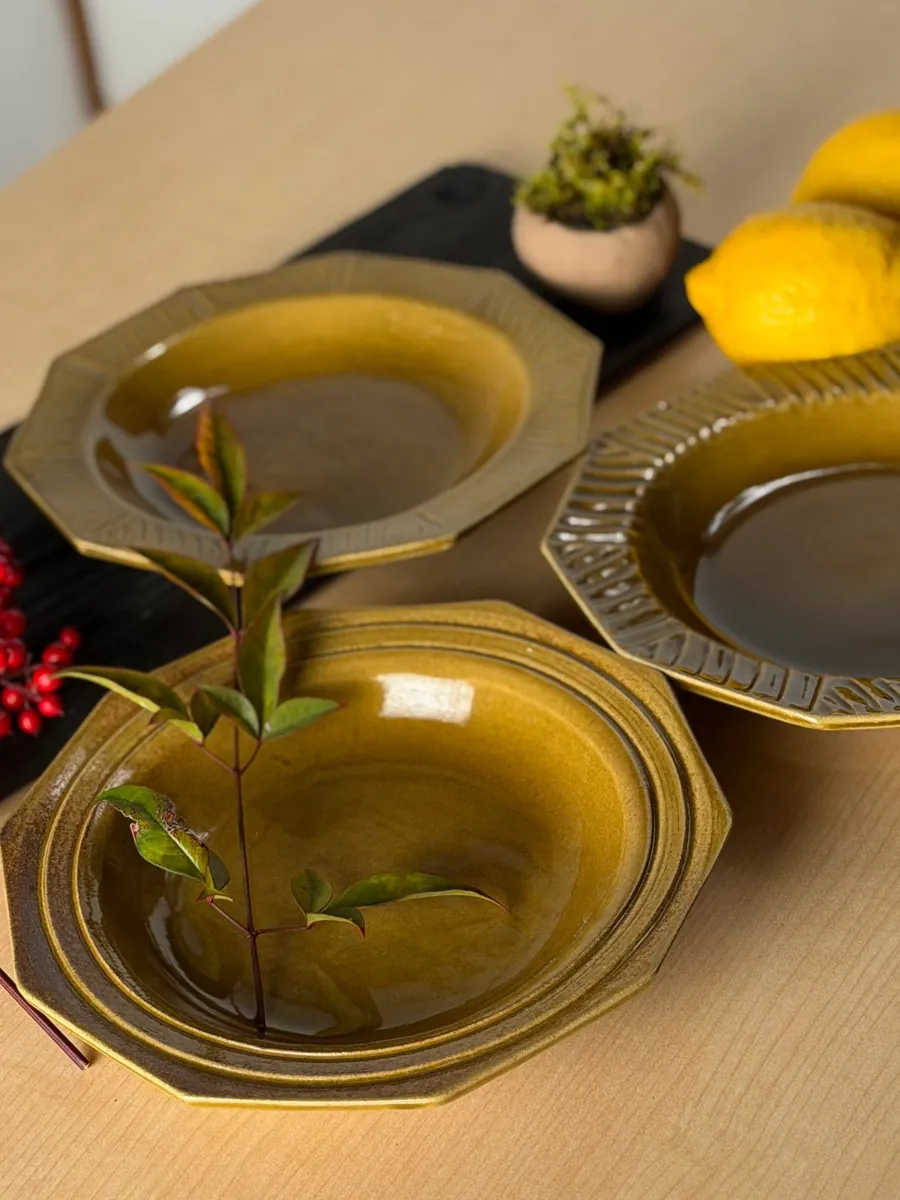
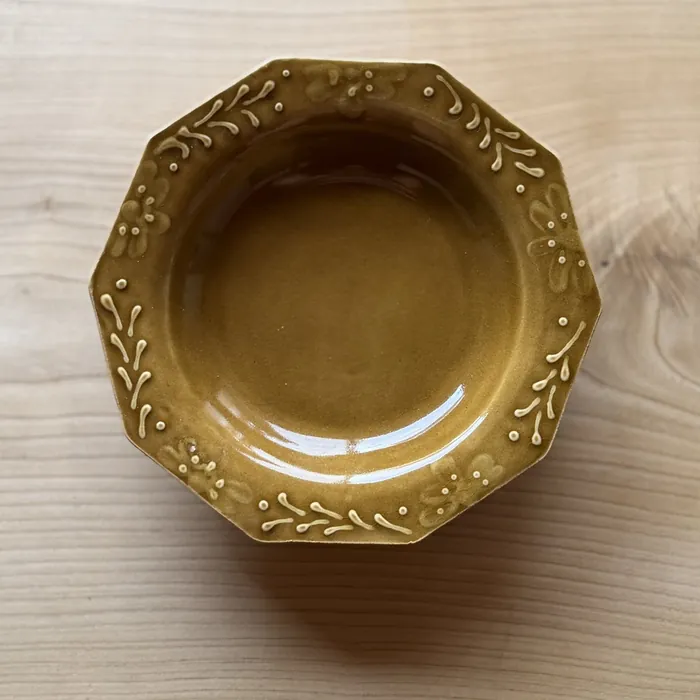
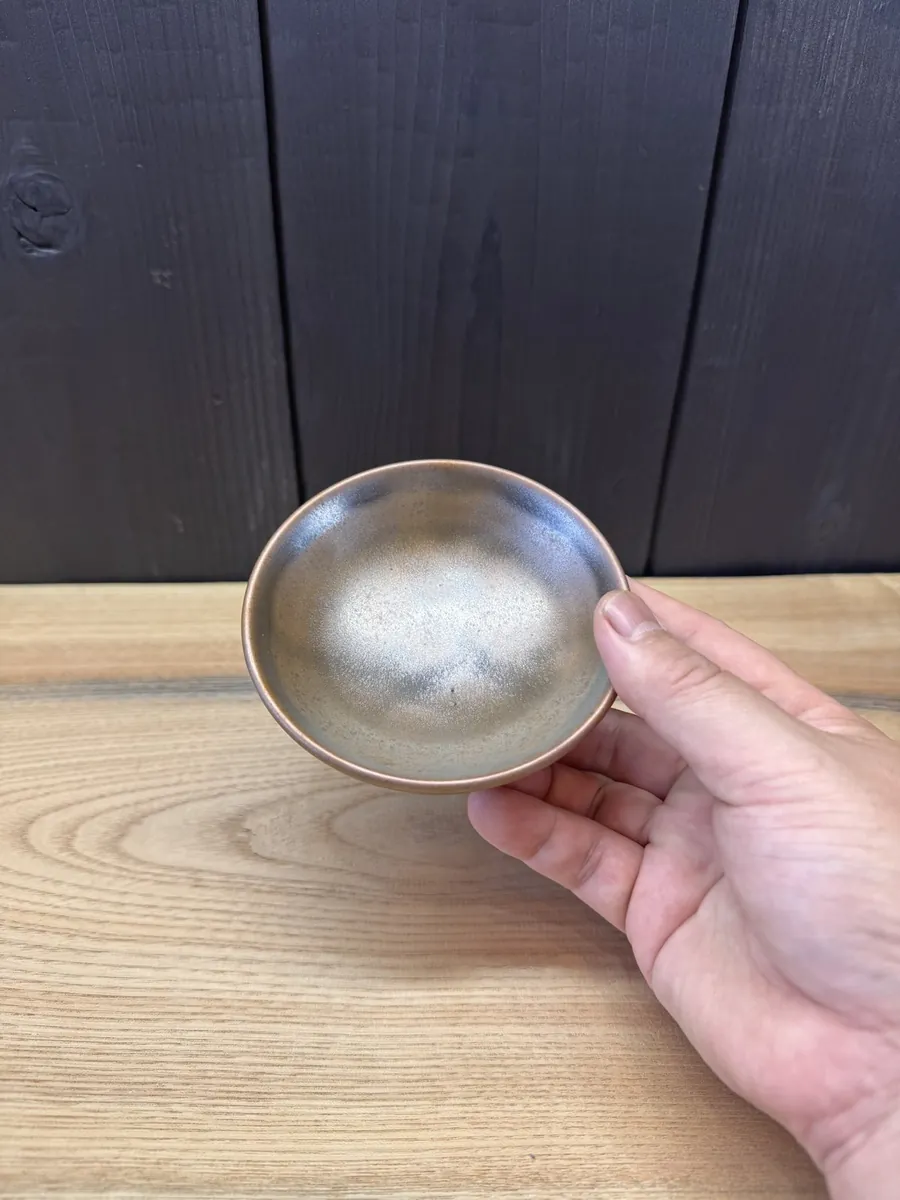
Amber glaze
飴釉
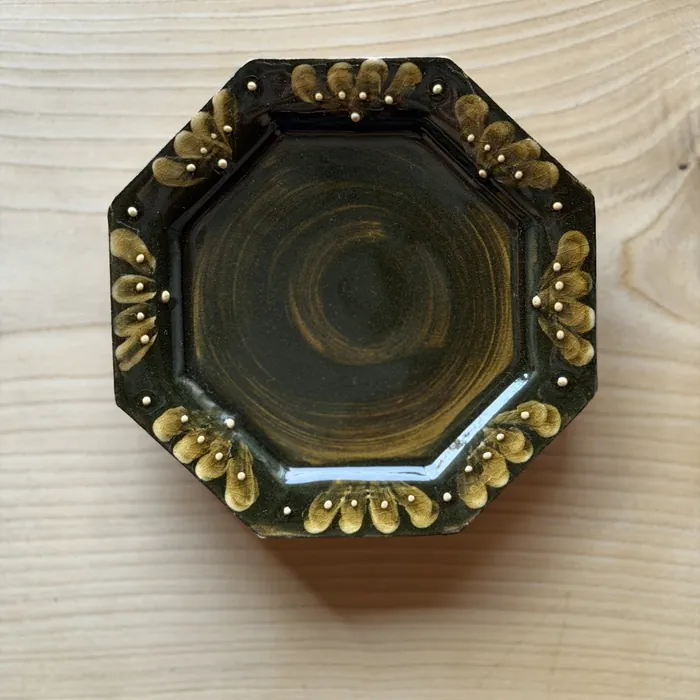
A deep, honey-colored glaze. It pools in the flower-shaped relief along the rim and shifts with the light.
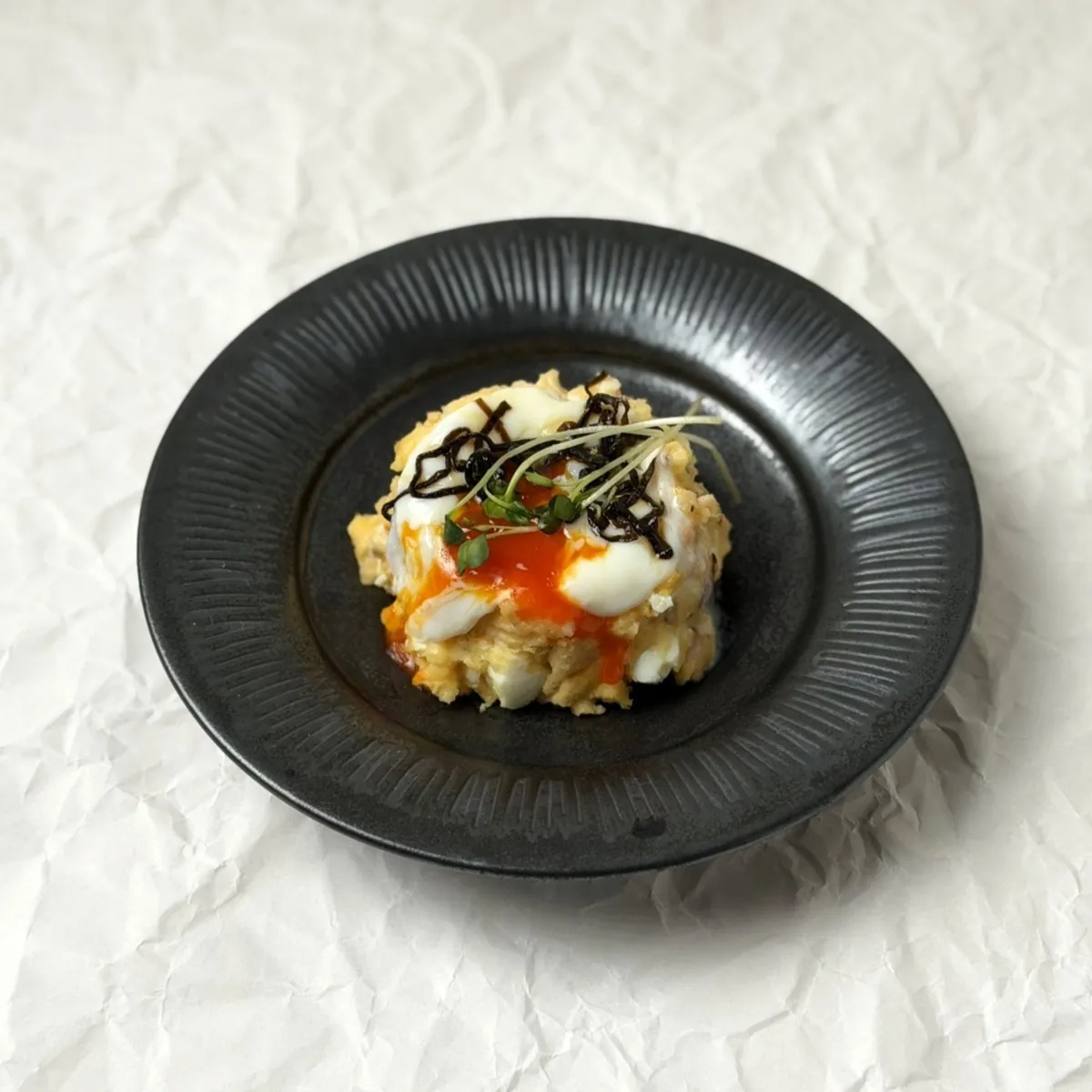
Tenmoku
天目
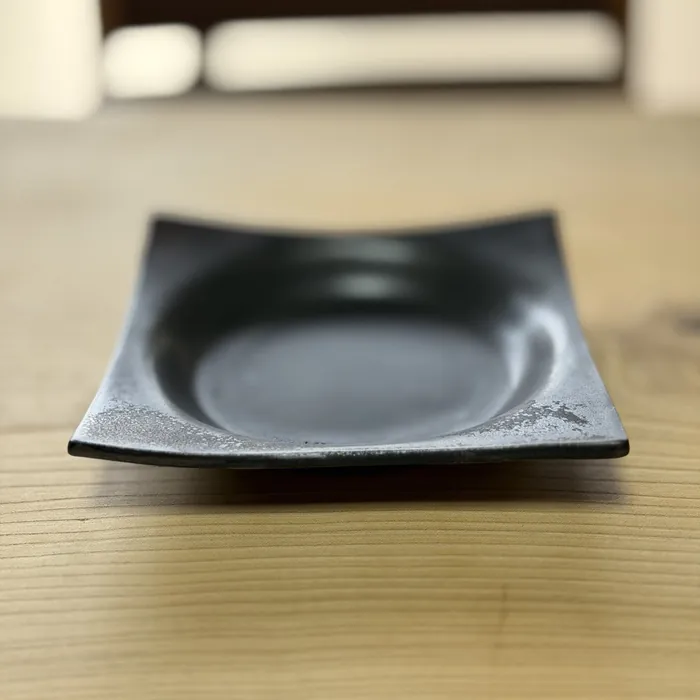
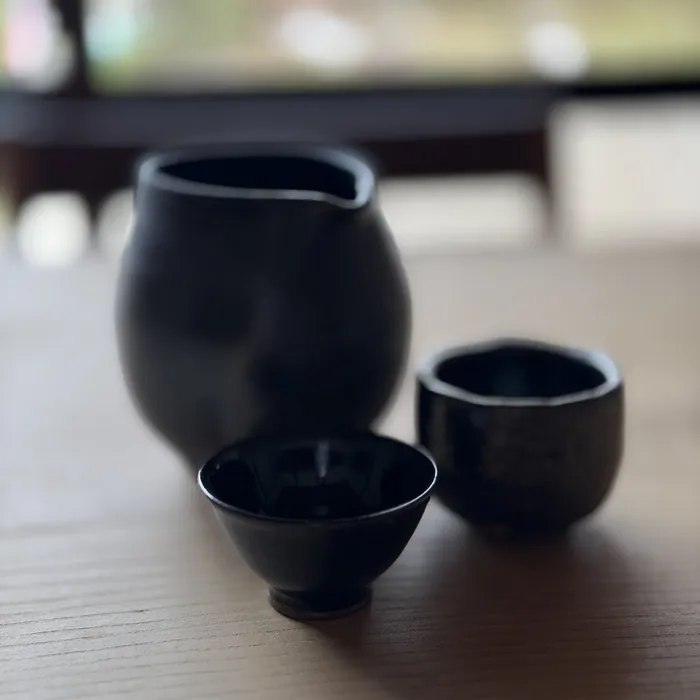
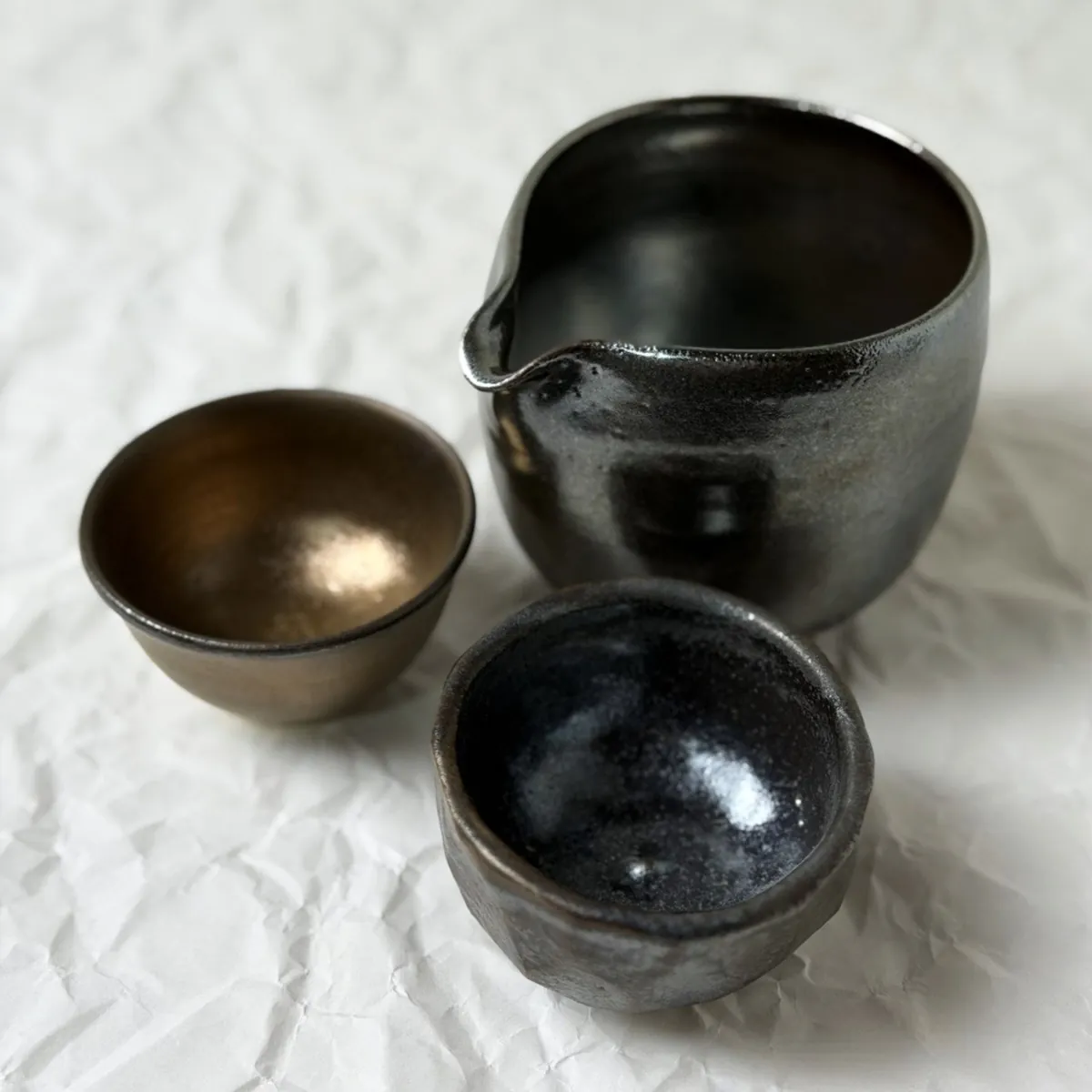
A black born in reduction firing, where the kiln is starved of oxygen. Tilt it to the light and silver rises from within.
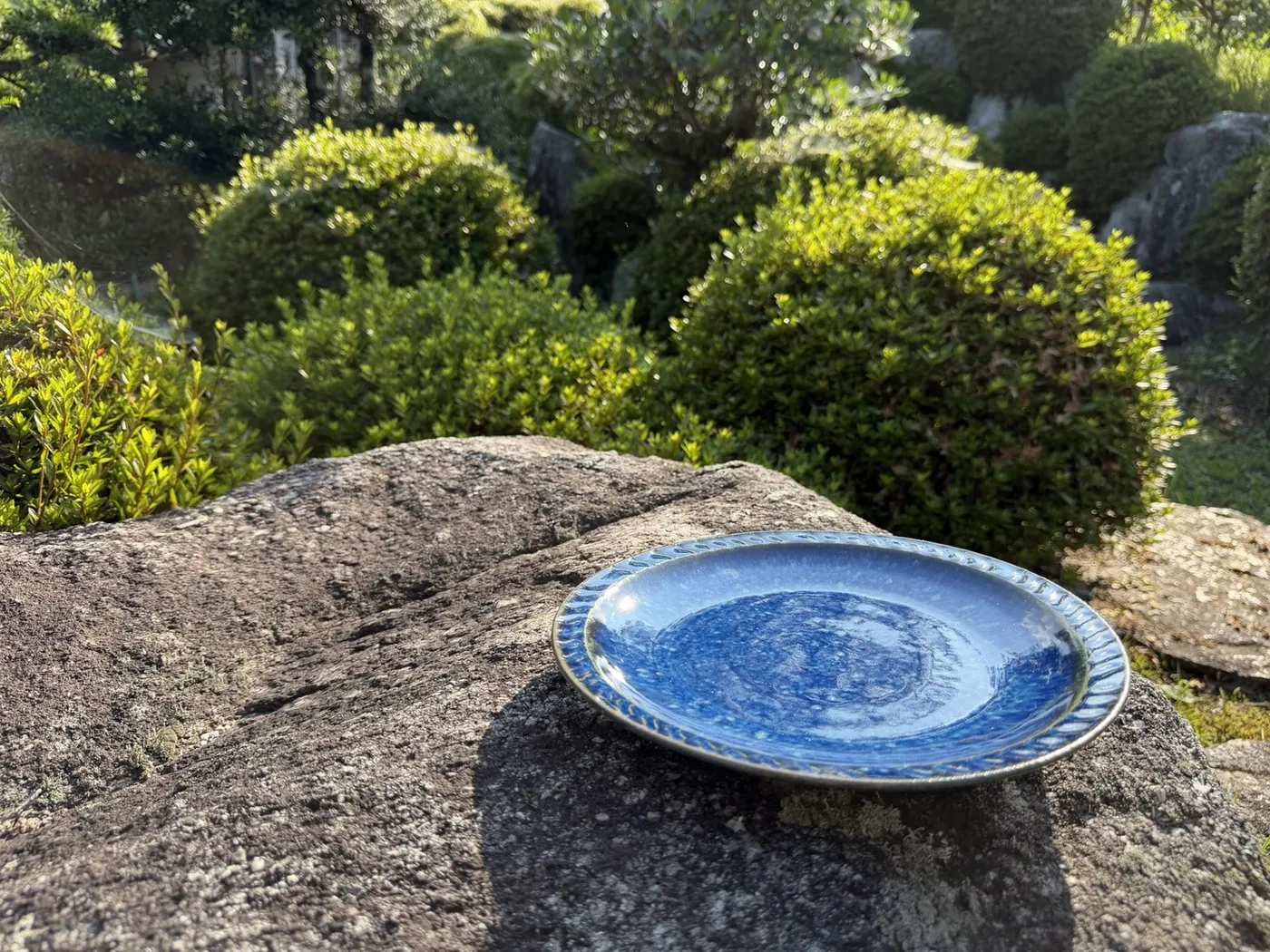
Lake Biwa blue
琵琶湖の青
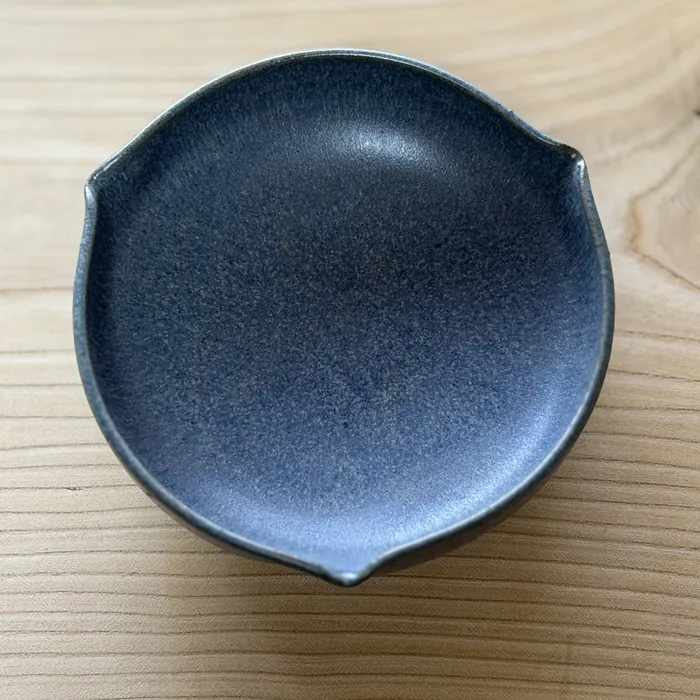
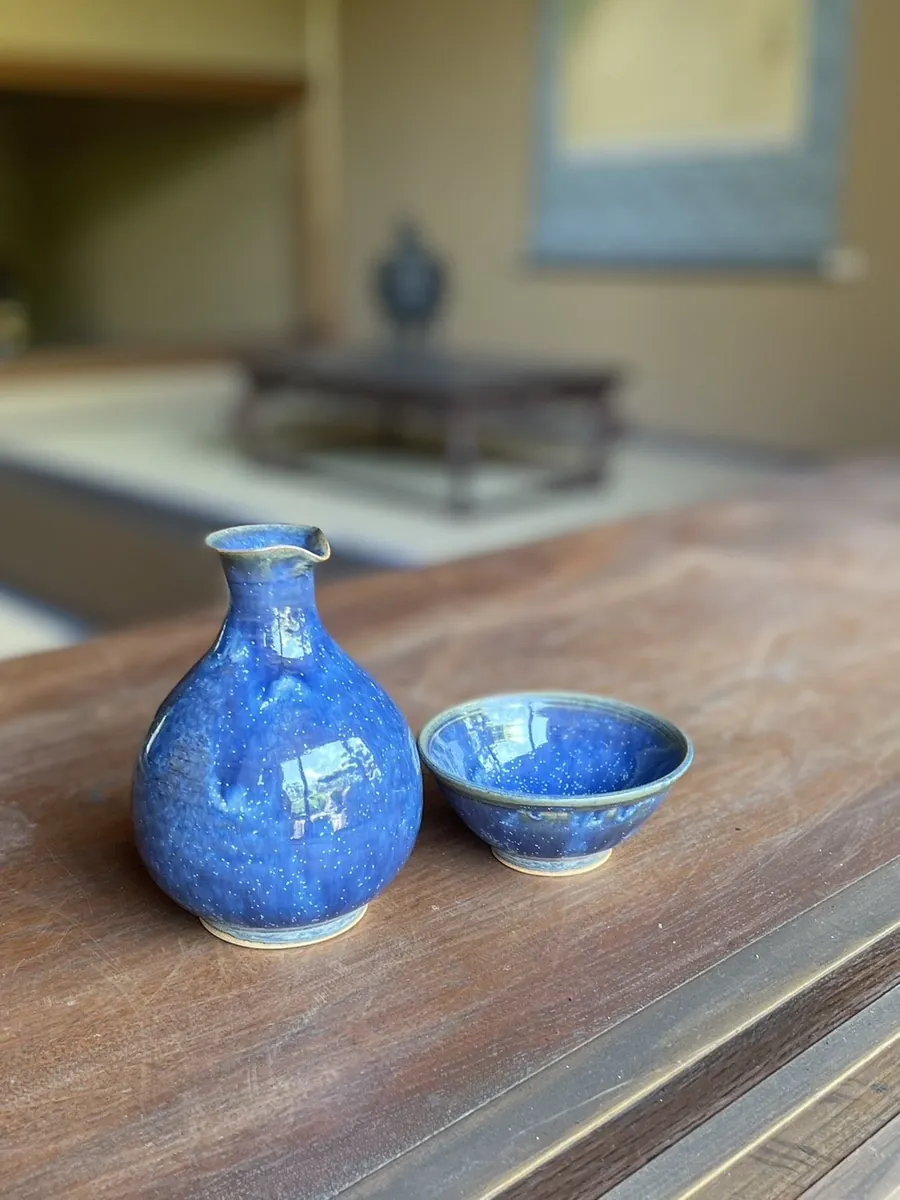
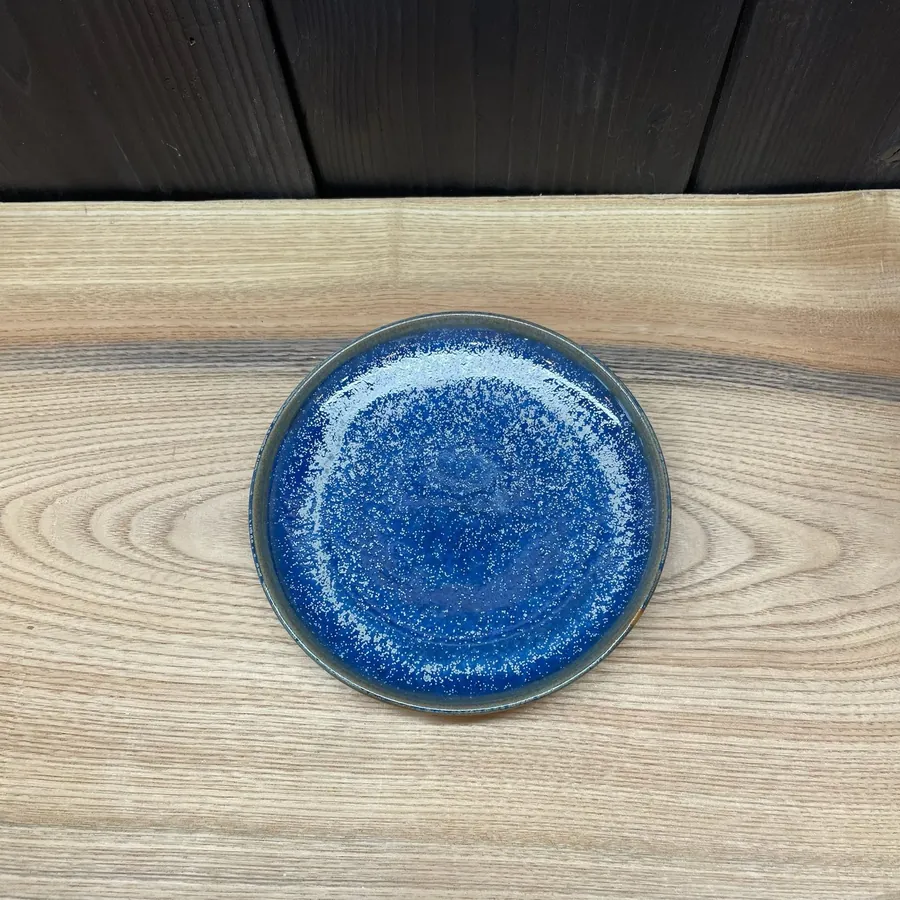
A blue we began in hopes of capturing the lake seen from our studio window. Still being refined, one firing at a time.
All works
すべてのうつわ
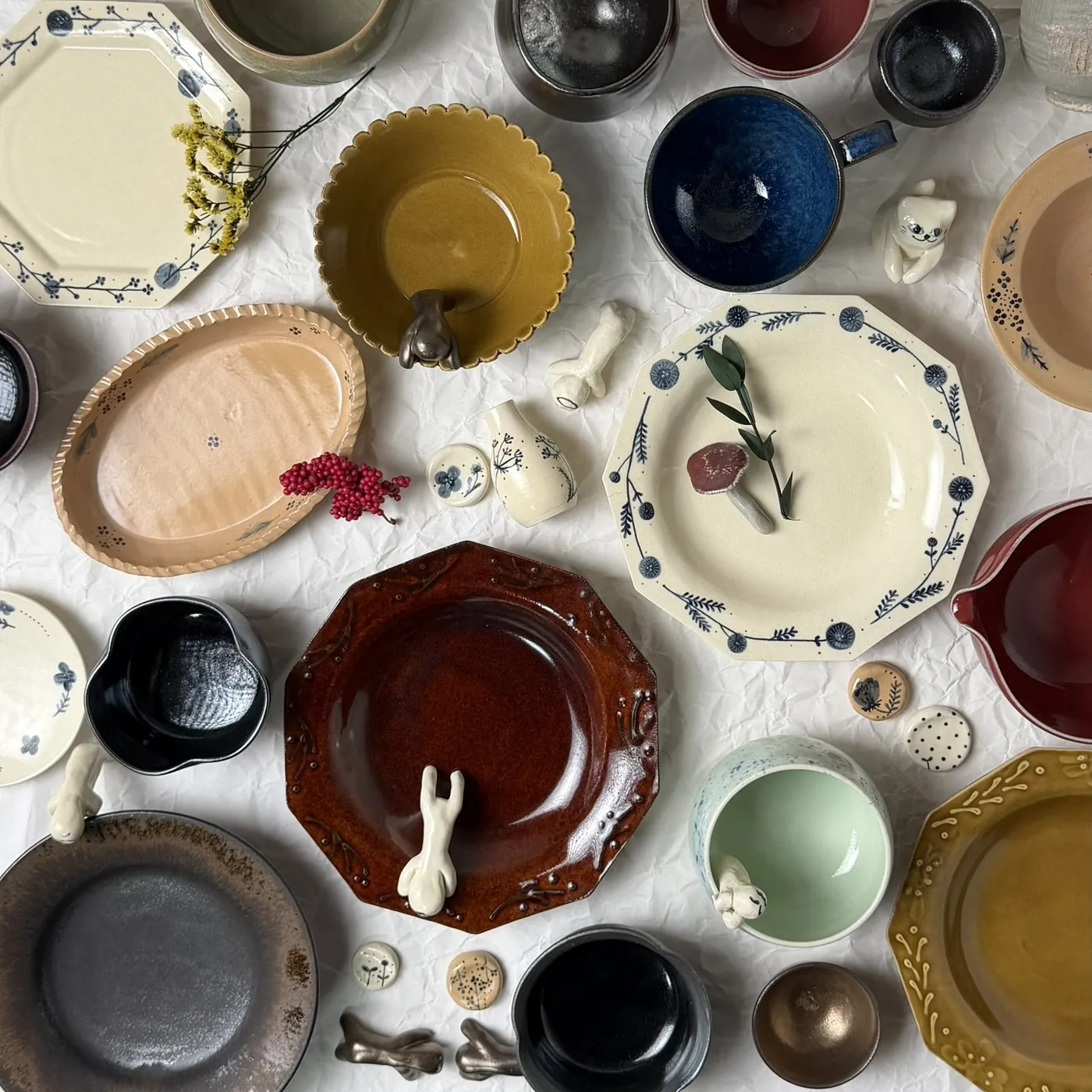
Plates, bowls, cups, sake ware and vases — everything currently available, in one place.
Color is born
in the kiln
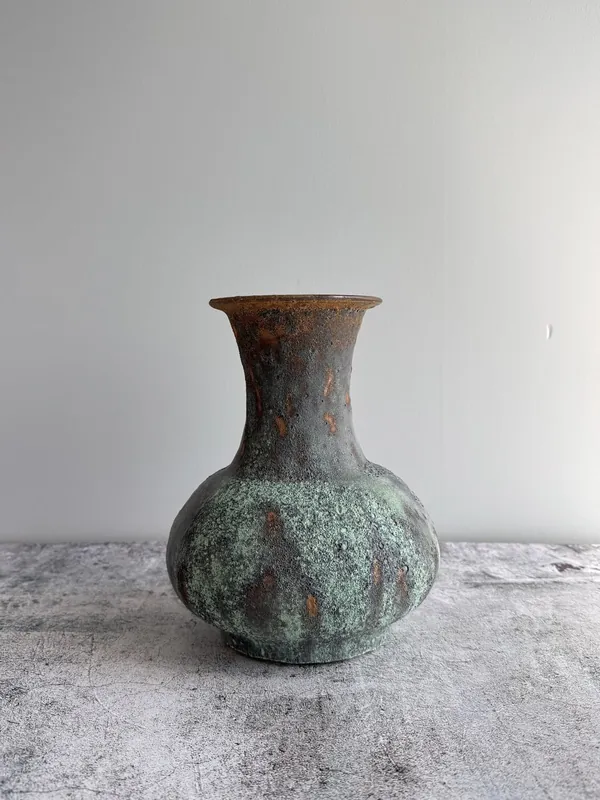
Glaze is made of minerals that melt into glass in the fire. The clay, the firing temperature and the flame inside the kiln can turn the same recipe into entirely different colors. Touch a swatch to see.
- Tenmoku
- Rust
- Silver
- Ash
- Lake blue
Tenmoku
Fired in reduction, the iron sinks into a deep black. The slightest flicker of flame brings out glints of silver from within — no two pieces are alike.
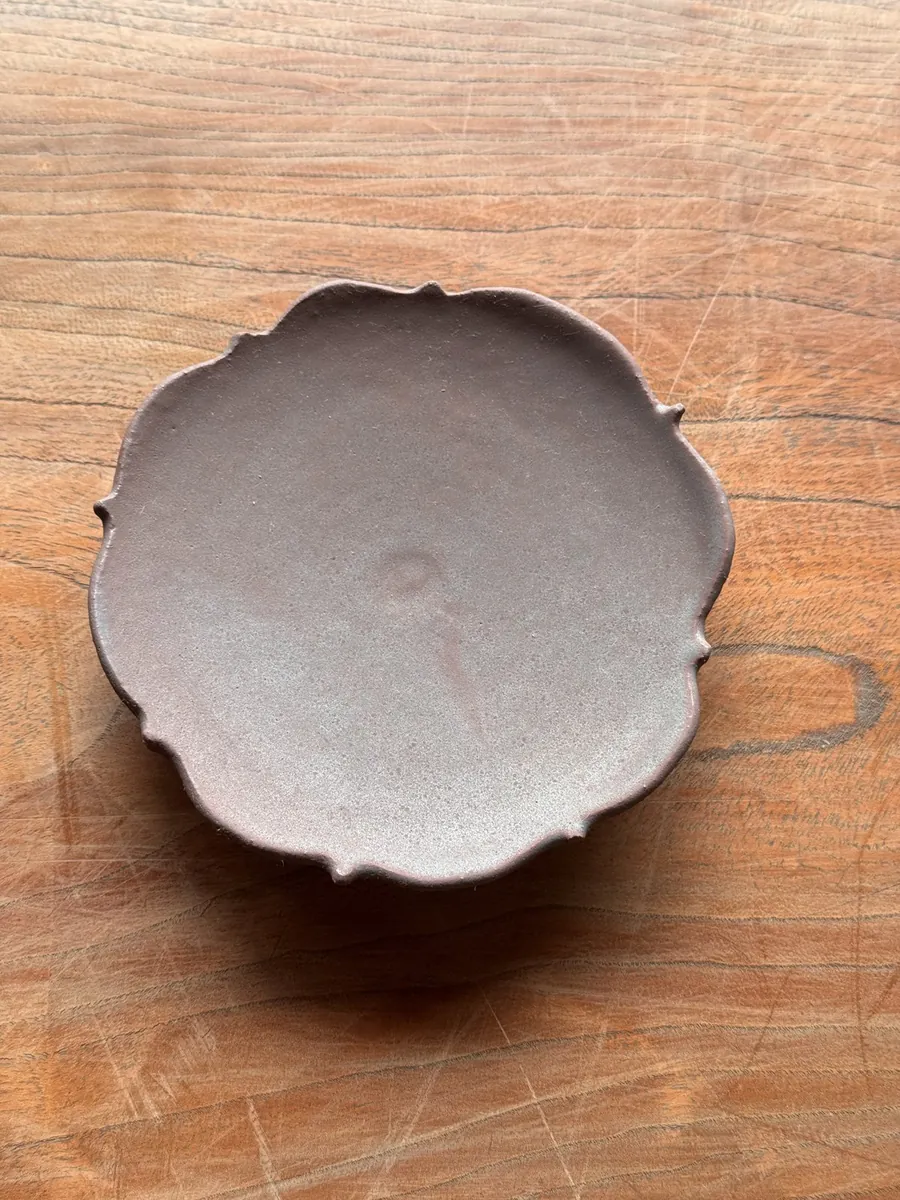
Rust
An iron-rich glaze fires to a russet brown over the clay. Along the flower-shaped rim, the rust tones gather and soften.
Silver
In reduction firing, the surface of the glaze can turn a muted silver. The slightest change in the kiln alters the result, making it a difficult color to achieve consistently.
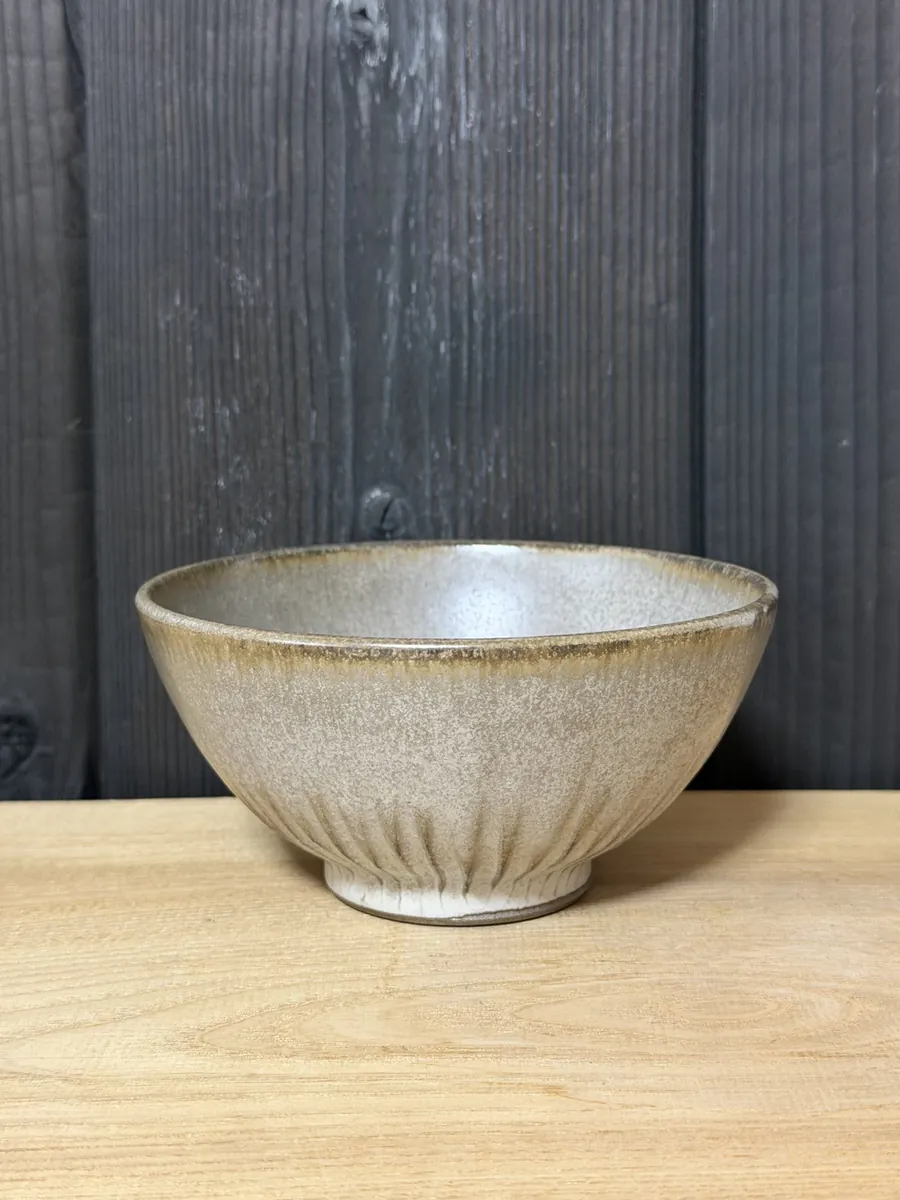
Ash
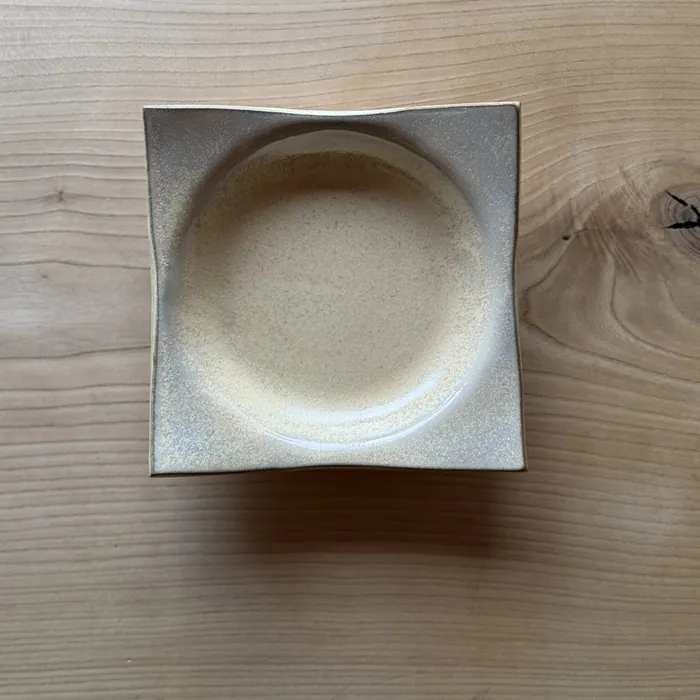
We make this glaze ourselves from the firewood ash of Ikadachi, Otsu, refined by hand through elutriation (suihi). A soft off-white that keeps the texture of the ash.
Lake blue
A blue we began in hopes of capturing Lake Biwa from our window. Like the water itself, it shifts between deep and shallow.
At your table
暮らしの中のうつわ
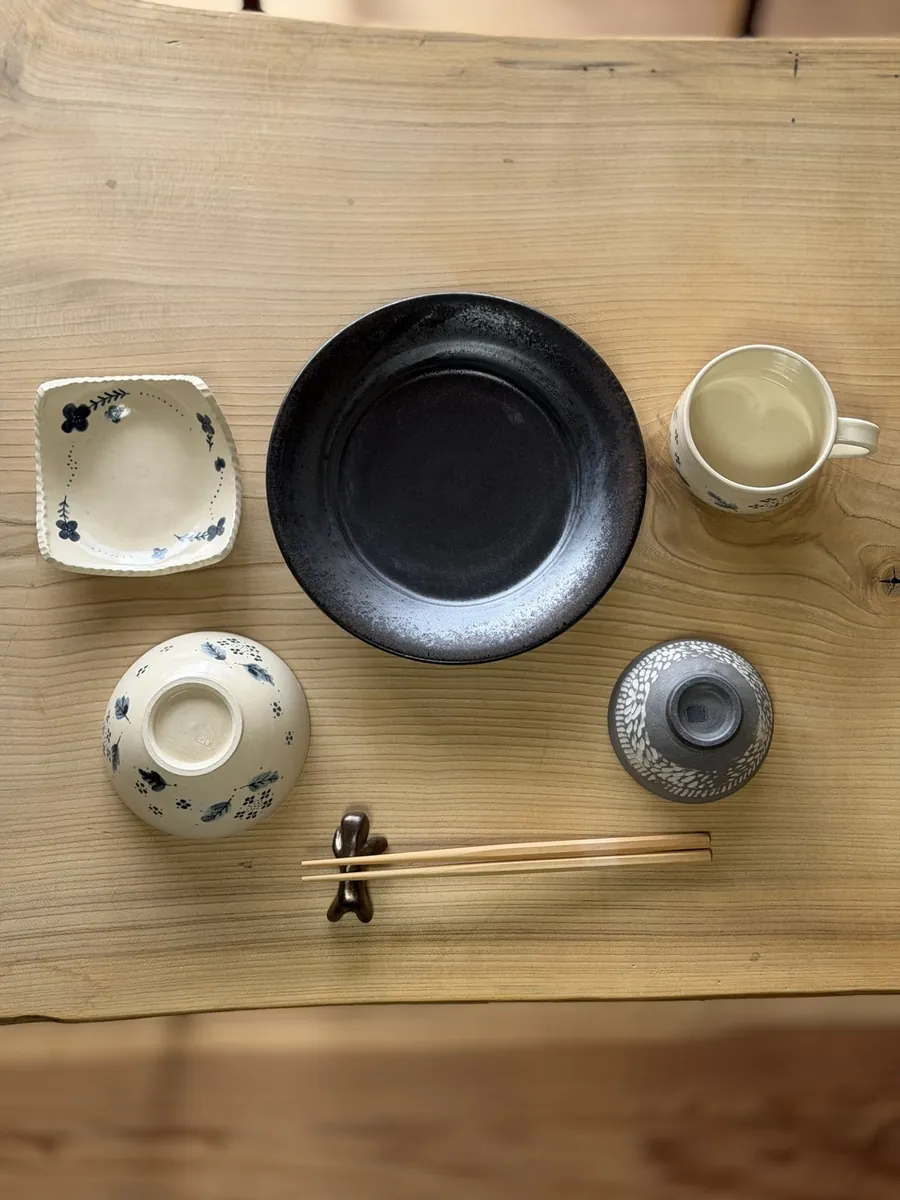
Scene 1
Start with three that fit your hand.
A rice bowl, a plate for your meal, a cup. Begin with the pieces you reach for every day — the best place to start if Tōki-gama is new to you.
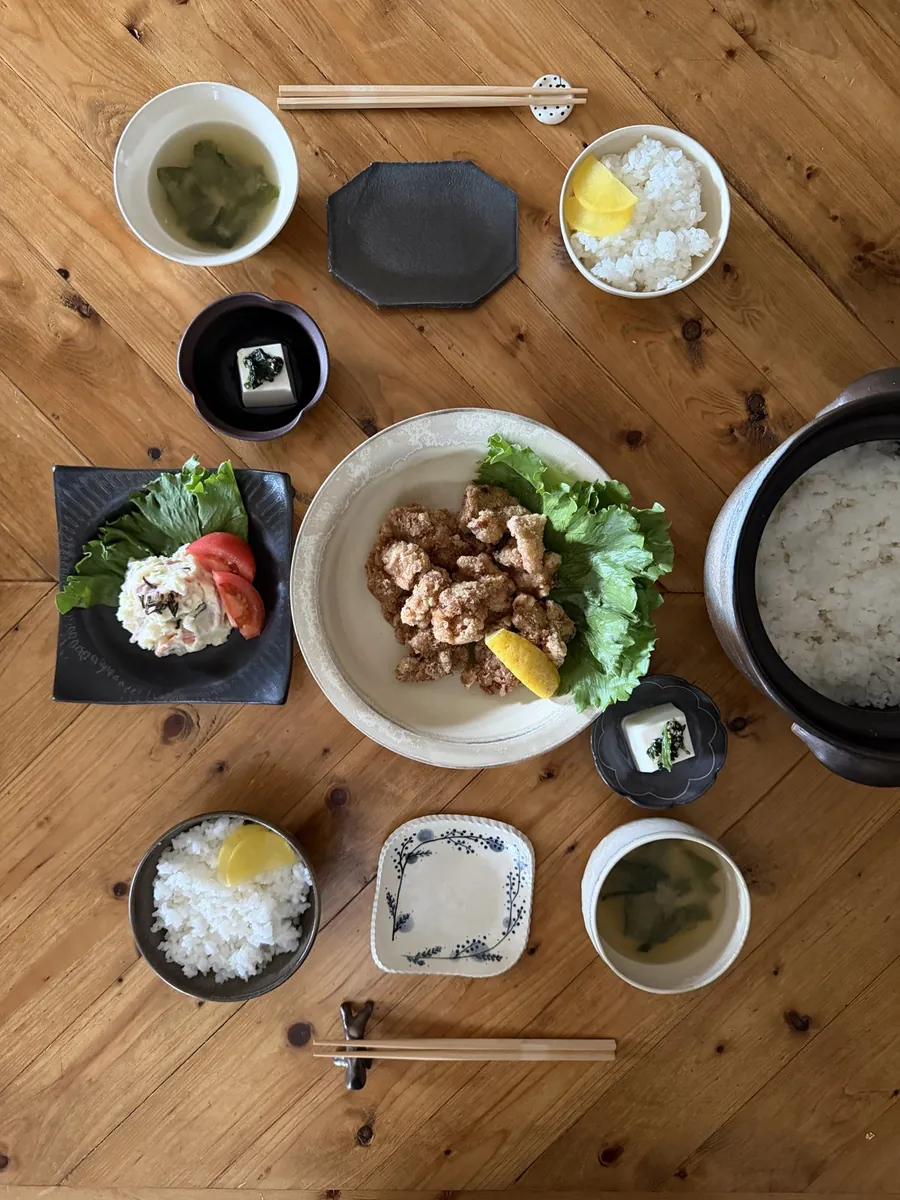
Scene 2
Set a table for two.
A matching pair, or two in different colors. For a new home, or as a gift.
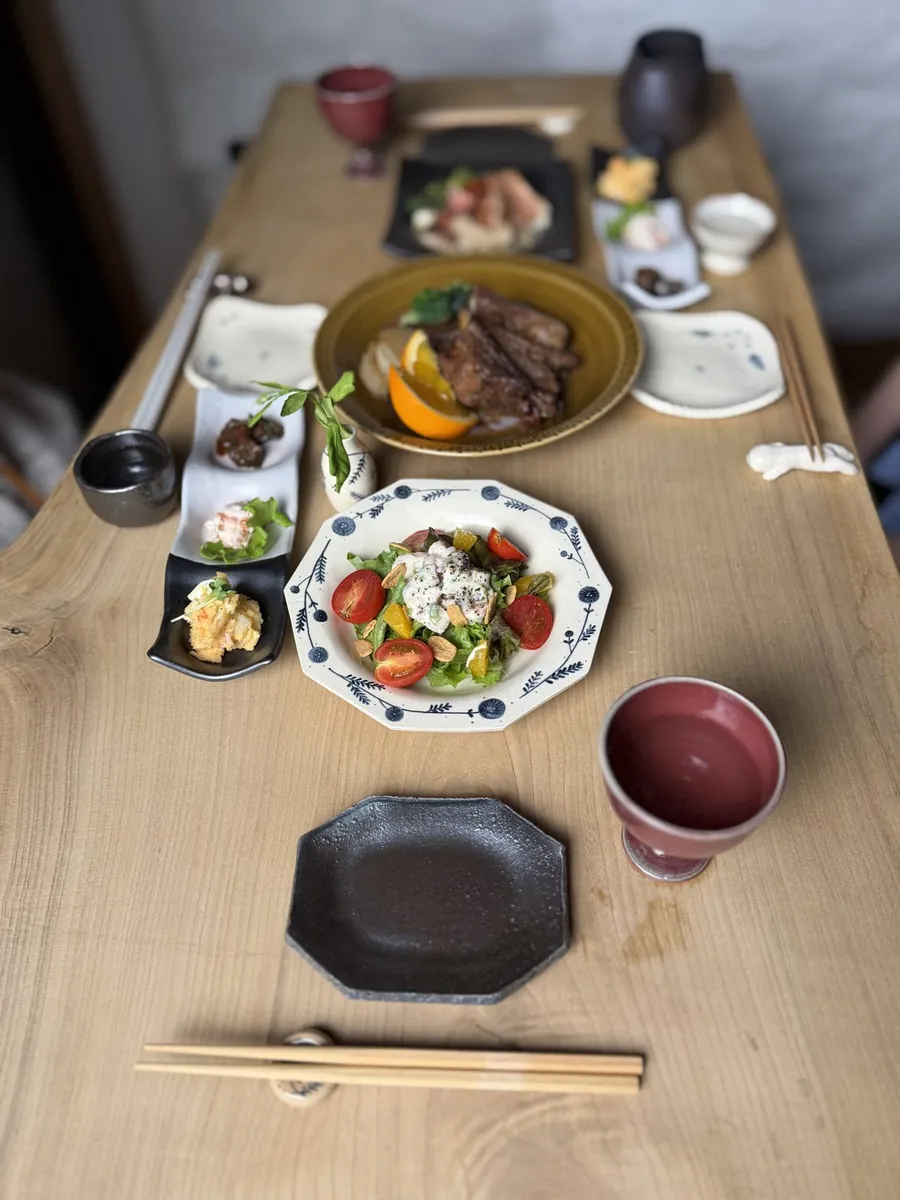
Scene 3
Platters and small bowls for days when people gather.
Pile food generously on a large platter and let everyone help themselves. With small bowls and plates for each guest, the table comes alive when people gather.
One studio,
two different hands.
作り手

Koji Umehara
梅原 幸治
Makes pottery that brings out the character of glaze — tenmoku, ash glaze, amber and more. He studied glazes at the Kyoto Municipal Institute of Industrial Technology and Culture, and works on reduction-fired tenmoku and a new blue glaze.
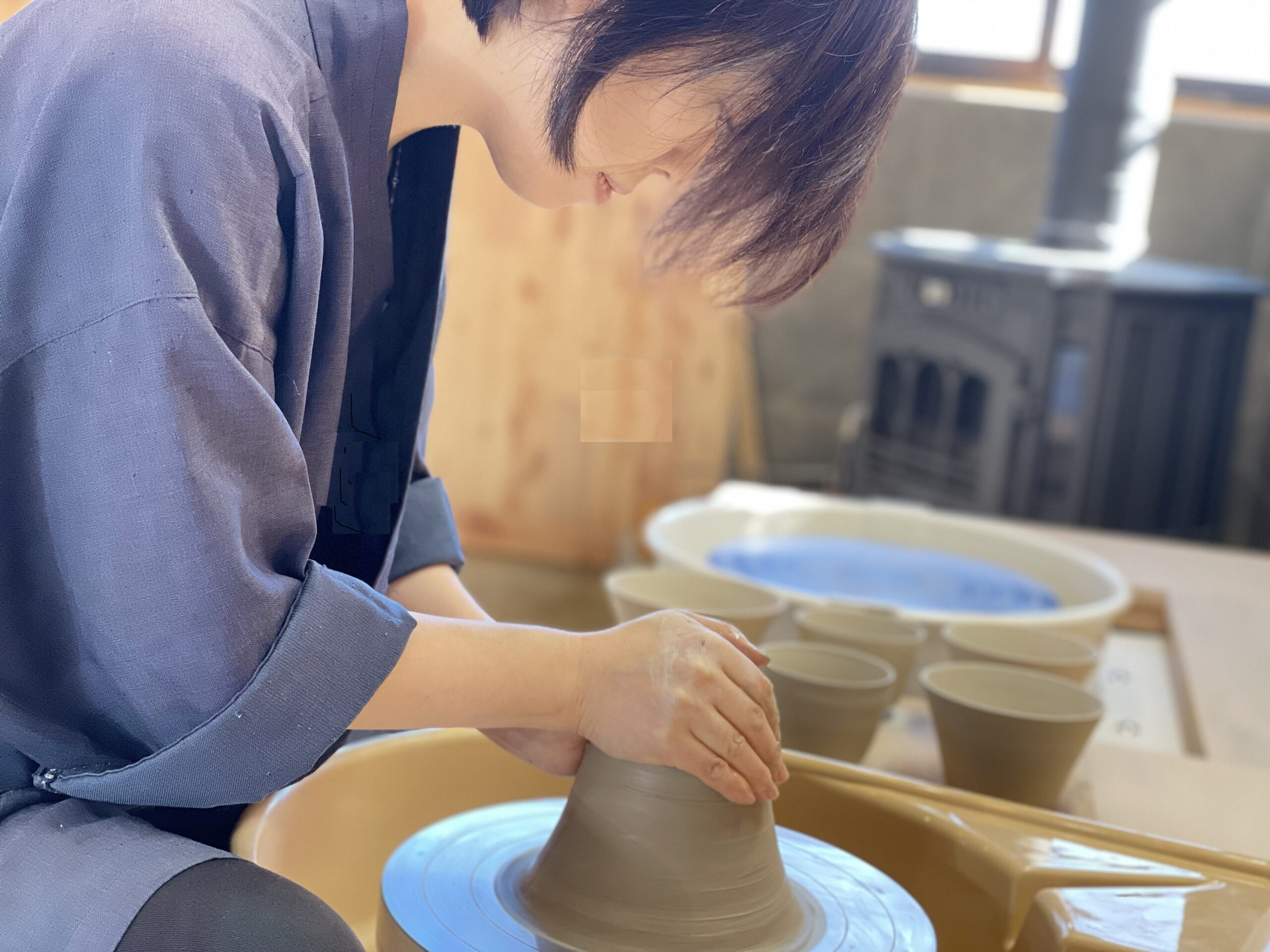
Miki Umehara
梅原 美希
Makes sometsuke and horie pottery: sometsuke, with flowers painted in cobalt on white clay, and horie, with pictures drawn in carved lines. Both share a gentle character.
Lake Biwa outside the window,
clay in our hands.
Our studio stands in Shigasato, Otsu, along the Imamichi-goe — an old road once walked by travelers bound for Kyoto. Lake Biwa lies beyond the window. The ash for our ash glaze comes from firewood in nearby Ikadachi, and we prepare it ourselves.
Shigasato, Otsu
Studio & kiln
Higashiyama-Sanjo, Kyoto
Workshop & office
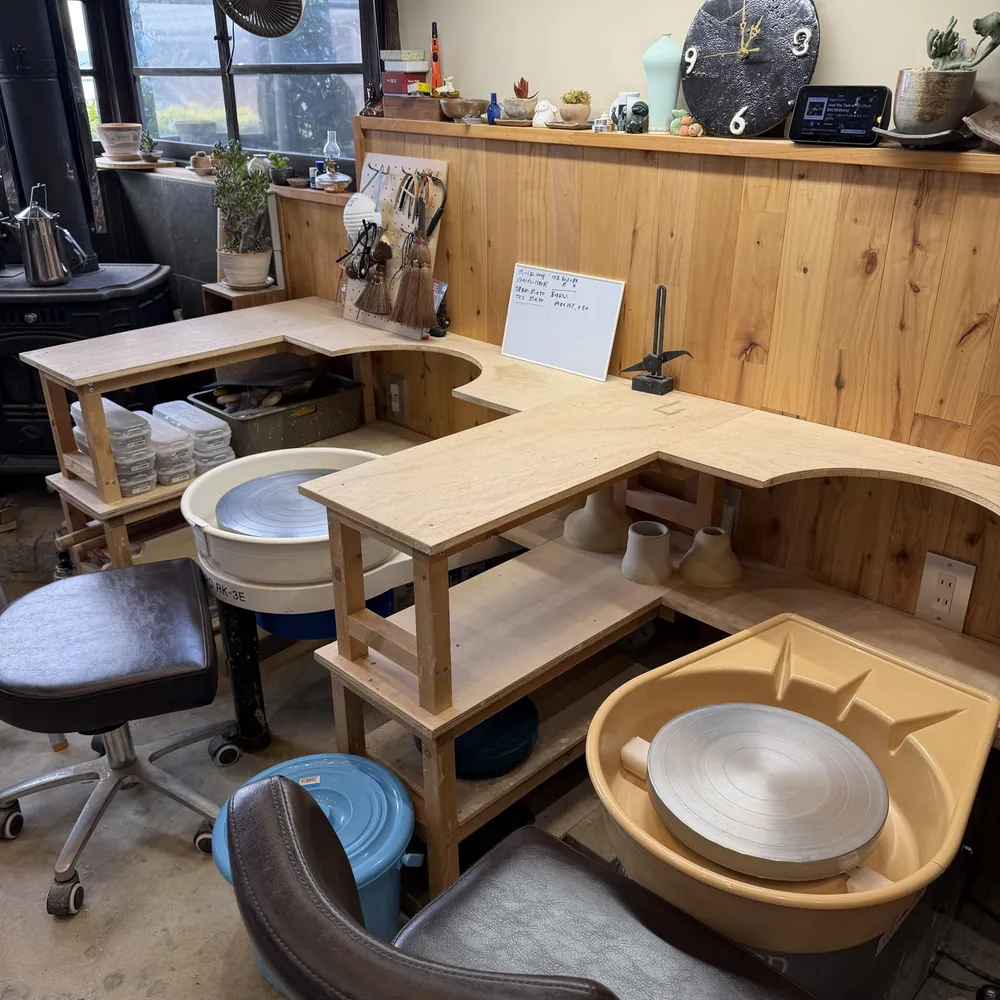
The wheel room
The kiln
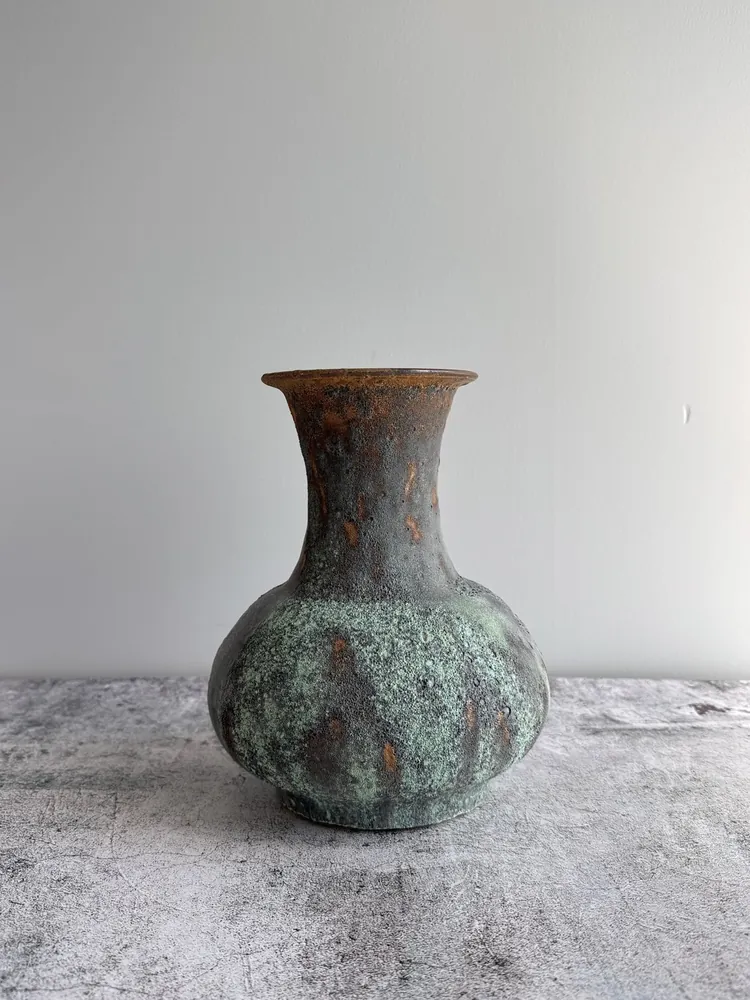
Vase
Shigasato, Otsu — Higashiyama, Kyoto — Clay of Shigaraki, ash of Ikadachi —
The article was not found.
Bring our pottery
home
Our pieces are available on Creema. For orders from outside Japan, please use Buyee, a shopping service that delivers Creema items worldwide.